

Company NewsMay 1, 2024 · Patrick Ball
What’s Dassault Systèmes doing at Piccadilly Circus?
People ProfilesApril 24, 2024 · Dassault Systèmes
Meet the mindful mentor who is changing how we think about work


Latest articles
Discover our most recent posts across all industries, brands and topics.
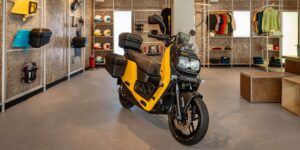
How industry-ready solutions can expedite success
Using the 3DEXPERIENCE platform out-of-the-box, Indian startup River Mobility has been able to design and develop Indie, its first electric scooter, quickly and easily.
How To Realize the Benefits of the Robot-as-a-Service Business Model
Unlock revenue and service excellence with Robot-as-a-Service (RaaS). Discover how RaaS transforms robotics economics, enhances service brilliance, and maximizes rewards for manufacturers.
Using the power of data science to drive automotive profitability
Dassault Systèmes, through its 3DEXPERIENCE platform and NETVIBES solution, spearheads the industrial renaissance by seamlessly integrating data science, AI, and virtual twin experiences to revolutionize collaboration, decision-making, and profitability in the automotive industry.
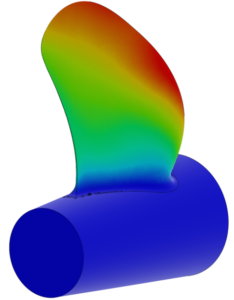
Simulation for Additive Manufacturing of a Marine Propeller
Additive manufacturing has great potential in the marine and offshore industry, helping naval engineers to build propellers that are lightweight and easy to repair. Simulation helps designers and AM process engineers to analyze residual stress in an AM component during the design phase and to optimize the printing process to improve strength.
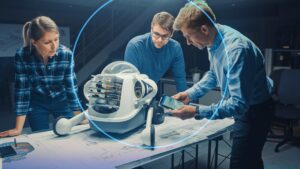
What role do people play in automated manufacturing?
In industry 5.0, technology will provide a platform for human talent to shine alongside automation and other innovations.

Navigating the Future of Supply Chain in Orlando and Barcelona!
At DELMIA, we have a long record of accomplishment of advanced planning optimization. We have also been hard at work more recently on a range of capabilities related to what we call “Data Science Experiences.” Learn more by joining us May 6 (for the US Xpo in Orlando) and June 10 (for Xpo Barcelona). There will also be a “who’s who” in industry for networking, learning and innovating in all things supply chain.

Virtual twins: Visualizing the future of cities
Virtual twins offer smart cities a transformative tool for informed decision-making, improved governance, and enhanced urban planning capabilities.
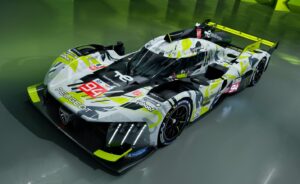
PEUGEOT 9X8 Hybrid Hypercar: from the virtual world to the racetrack
The PEUGEOT 9X8 is more than just a distinctive and beautiful race car. Marking Peugeot Sport’s long-awaited return to the topflight of endurance racing, the Hybrid Hypercar is the result of a winning combination of creative freedom and advanced simulation technology.

Maximizing mining value with the 3DEXPERIENCE platform
Dassault Systèmes’ 3DEXPERIENCE platform revolutionizes mining processes by leveraging cloud-based simulations to optimize reserves, enhance profitability, and ensure long-term sustainability.

Optimizing Strategic Mine Planning with Simulation
Mining firms in the Asia-Pacific region face a myriad of challenges, from geopolitical uncertainties to market fluctuations, emphasizing the critical need for optimized strategic mine planning to ensure resilience and value creation amidst volatile conditions.
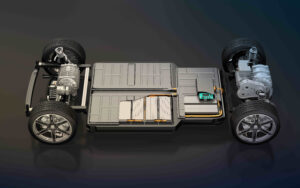
Unlocking EV Performance: Key Insights for Advancing Battery Integration
Discover game-changing insights in EV battery integration, from modular designs to data-driven optimization and sustainability initiatives, driving innovation in the future of mobility.
Explore our topics
Discover stories on key trends that are transforming the business and social landscape.
Company News
Keep up with the latest happenings at Dassault Systèmes.
How industry-ready solutions can expedite success
Using the 3DEXPERIENCE platform out-of-the-box, Indian startup River…
What role do people play in automated manufacturing?
In industry 5.0, technology will provide a platform…

What’s Dassault Systèmes doing at Piccadilly Circus?
A dynamic display at London’s Piccadilly Lights demonstrates…
PEUGEOT 9X8 Hybrid Hypercar: from the virtual world…
The PEUGEOT 9X8 is more than just a…
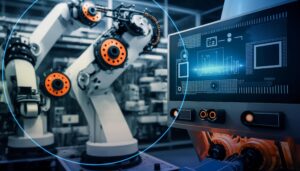
The opportunity advantage of early AI adoption
Failure to adopt AI quickly and effectively can…
Design & Simulation
Today’s challenges are being met with innovative design and manufacturing and improve through simulation.
Simulation for Additive Manufacturing of a Marine Propeller
Additive manufacturing has great potential in the marine…
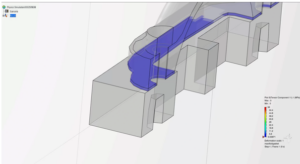
Gasket Simulation in Abaqus
This blog discusses gasket simulation in Abaqus/Standard, focusing…
How to Get Started with MBSE?
Your most common question answered with this practical…
The secret behind smart home product development: platform-based…
Consumers shopping for home products notice the common…

Navigating Complexities of Radar Vehicle Integration Leveraging Electromagnetic…
Please welcome guest blogger, Yadhukrishnan MK, of Continental…
Editor’s picks
Explore our favorite stories

Manufacturing
It’s Fall Festival Time! Is Your Supply Chain…
Many event planners and teams focused on the supply chain may also wonder about possible…

Manufacturing
Decoding with Artificial Intelligence and Augmented Reality
New technologies offer considerable opportunities and advantages to industrial players seeking to adapt to the…
Company News
How green is your car?
The way a car’s environmental performance is measured is changing. One German engineering services provider…

Company News
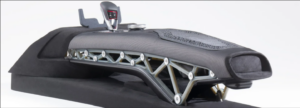
How one company is leading a revolution in…
With a novel approach to reconstructive surgery, LATTICE MEDICAL is helping to shape the next…
Manufacturing
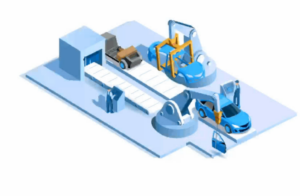
Virtual Twins for Industrial Robotics
While 34% percent of today’s biggest companies have committed to zero-emissions goals, 93% will miss…

Company News
What will healthy mean in 2040?
A new vision emerges for the convergence of life sciences innovation with global healthcare, into…

Design & Simulation
Ask an Engineer: What is Machine Learning and…
An interview with SIMULIA’s Jing Bi, a Technology Senior manager who specializes in physics-based simulation…
Latest articles from brands
Learn more about our portfolio of 3D modeling applications, simulation applications creating virtual twins, social and collaborative applications, and information intelligence applications.

The Dassault Systémes Marketing and Sales brand 3DEXCITE provides comprehensive solutions for collaboration and 3D product content creation directly from a secure cloud network, the 3DEXPERIENCE® platform.


BIOVIA is the world’s leading solution for product design and experience. It delivers the unique ability not only to model any product in 3D but to do so in the context of the products real life behavior.
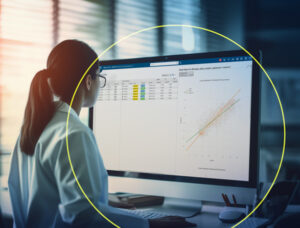

CATIA provides product design and experience capabilities for designers, engineers and system architects to conceive, develop and realize the connected products and experiences we see and use in our everyday lives.
Design & Simulation
How to Get Started with MBSE?

Powered by Dassault Systèmes’ 3DEXPERIENCE platform, DELMIA solutions address the most challenging situations manufacturers experience today. We connect the virtual and real worlds with immersive technology to empower our customers worldwide to collaborate, model, optimize, and execute manufacturing, logistics, and service across an efficient and connected supply chain.

ENOVIA provides enterprise planning, IP management, process governance, and collaborative product development capabilities for multi-disciplinary teams to collaboratively build and execute a successful plan across the entire enterprise.
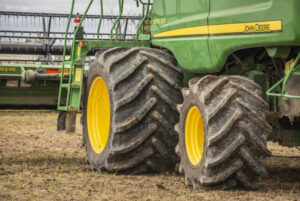

GEOVIA provides modelling, designing, simulation and monitoring for geoscientists, earth engineers, urban planners and citizens to enable the sustainable use and reuse of natural resources across urban environments and the broader infrastructure sector.

NETVIBES provides data science capabilities that reveal information intelligence for all business users to gain business insights that drive performance.

SIMULIA provides realistic multiphysics simulation, design exploration, and optimization capabilities for designers, engineers and researchers to virtually test, improve and validate their innovations for performance, safety and consumer experiences while reducing cost and time to market.
Design & Simulation
Simulation for Additive Manufacturing of a Marine Propeller
Stay up to date